
Primary Antibody Matched Pairs


Sino Biological Recombinant Human CCR9 Protein (VLP, Full-length, Flag & His-Strep Tag)
A DNA sequence encoding the Human CCR9 (P51686) (Met1-Leu369) was expressed, with a Flag tag at the N-terminus, a polyhistidine tag and a strep tag at the C-terminus.

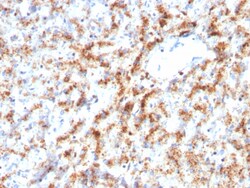
Biotium Cathepsin D (Tumor Marker)(CTSD/3082), 0.2mg/mL
Cathepsin D is a ubiquitously expressed lysosomal aspartyl protease involved in the normal degradation of proteins. It is synthesized as an inactive 43 kDa preprocathepsin D that is cleaved and glycosylated to form a 46 kDa procathepsin D and then further cleaved to produce 28 kDa and 15 kDa subunits (heavy and light chains, respectively). Cathepsin D exhibits pepsin-like activity and plays a role in protein turnover and in the proteolytic activation of hormones and growth factors. Mutations in this gene play a causal role in neuronal ceroid lipofuscinosis-10 and may be involved in the pathogenesis of several other diseases, including breast cancer and possibly Alzheimer's disease. Primary antibodies are available purified, or with a selection of fluorescent CF Dyes and other labels. CF Dyes offer exceptional brightness and photostability. Note: Conjugates of blue fluorescent dyes like CF405S and CF405M are not recommended for detecting low abundance targets, because blu
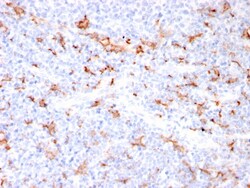
Biotium S100A9 + Calprotectin (S100A8/A9 Complex)(MAC3157R), CF405S conjugate, 0.1mg/mL
Recognizes the L1 or Calprotectin molecule, an intra-cytoplasmic antigen comprising of a 12 kDa alpha chain and a 14 kDa beta chain expressed by granulocytes, monocytes and by tissue macrophages. Macrophages usually arise from hematopoietic stem cells in the bone marrow. Under migration into tissues, the monocytes undergo further differentiation to become multifunctional tissue macrophages. They are classified into normal and inflammatory macrophages. Normal macrophages include macrophages in connective tissue (histiocytes), liver (Kupffer's cells), lung (alveolar macrophages), lymph nodes (free and fixed macrophages), spleen (free and fixed macrophages), bone marrow (fixed macrophages), serous fluids (pleural and peritoneal macrophages), skin (histiocytes, Langerhans's cell) and in other tissues. Inflammatory macrophages are present in various exudates. Macrophages are part of the innate immune system, recognizing, engulfing and destroying many potential pathogens including

Human CSF1 ELISA Pair Set 5PP (Sino Biological)
Each vial contains 22 ng of recombinant Human M-CSF/CSF-1. Reconstitute with 1 mL detection antibody dilution buffer. After reconstitution, store at -20℃ to -80℃ in a manual defrost freezer. A seven-point standard curve using 2-fold serial dilutions in sample dilution buffer, and a high standard of 1500 pg/mL is recommended.

Medchemexpress LLC CD79B protein, recombinant (rat, HEK293, C-terminal His tag) | 98.0% | 50 UG

Recombinant rat CD79B (Igβ) protein is expressed in HEK293 cells with a C-terminal His tag. The protein comprises 228 amino acids and is intended for research into B-cell receptor signaling, B cell development, and studies of glycosylation and lymphoma biology.
- Expressed in HEK293 mammalian cells to preserve post-translational modifications.
- Contains a C-terminal His tag for purification and detection.
- Composed of 228 amino acids matching the rat CD79B sequence.
- Suitable for studies of B-cell receptor signaling, B cell development, and lymphoma biology.
- High purity (98.0%) appropriate for biochemical and cell-based assays.

ABclonal Technology Genious 2X SYBR Green Fast qPCR Mix
Real-time Quantitative PCR (qPCR) is a powerful technique in detecting initial DNA input in a PCR reaction by fluorescence signal accumulation. ABclonal Genious 2X SYBR Green Fast qPCR Mix is a fluorescence reagent for qPCR reactions using the SYBR(R) Green I. This product provides real-time data on DNA amplification during PCR by performing quantitative fluorescence signal detection on SYBR(R) / FAM channels. This product uses the antibody-based hot-start Taq enzyme for amplification, which greatly improves the specificity of the product while ensuring the amplification effect. At the same time, by optimizing the qPCR Mix Buffer system, the product is suitable for multiple species, providing a powerful tool for multidisciplinary experimental needs. This product is a 2X pre-mix enzyme, contains all the components required for qPCR except primers and templates, providing great convenience for experimental manipulation.

Influenza B NP ELISA Pair Set 15PP (Sino Biological)
Each vial contains 85 ng of recombinant Influenza B (B/Washington/02/2019) Nucleoprotein. Reconstitute with 1 mL dilution buffer. After reconstitution, store at -20℃ to -80℃ in a manual defrost freezer. A seven-point standard curve using 2-fold serial dilutions in dilution buffer, and a high standard of 2500 pg/mL is recommended.
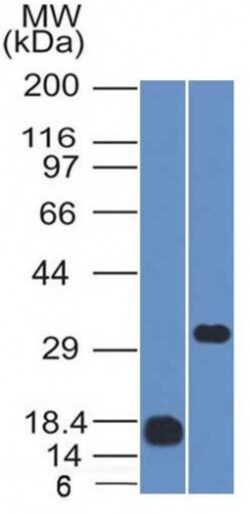
Biotium CD79b (B-Cell Marker)(IGB/1843), CF488A conjugate, 0.1mg/mL
CD79 (also designated Ig chains, designated CD79B or B29. The B cell antigen receptor complex (BCR) is formed by the association of CD79 with a membrane immunoglobulin, such as IgM or IgD. The membrane immunoglobulins IgM and IgD achieve surface expression and antigen presentation function in response to CD79 association. The cytoplasmic tails of both CD79A and CD79B contain an ITAM (immuno-receptor tyrosine-based activation) motif, which acts to initiate the BCR signaling reactions by binding to and activating tyrosine kinases. Primary antibodies are available purified, or with a selection of fluorescent CF Dyes and other labels. CF Dyes offer exceptional brightness and photostability. Note: Conjugates of blue fluorescent dyes like CF405S and CF405M are not recommended for detecting low abundance targets, because blue dyes have lower fluorescence and can give higher non-specific background than other dye colors.
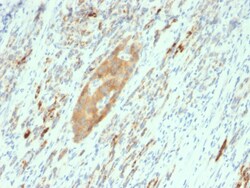
Biotium GAD2 / GAD65 (GABAergic Neuronal Marker)(GAD2/2362), CF488A conjugate, 0.1mg/mL
This MAb recognizes a protein of 65 kDa, which is identified as glutamic acid decarboxylase 2 (GDA2). It is responsible for catalyzing the production of gamma-aminobutyric acid from L-glutamic acid. There are two forms of glutamic acid decarboxylases (GAD's) that are found in the brain: GAD2 (also known as GAD65) and GAD1 (also known as GAD67). GAD1 and GAD2 are members of the group II decarboxylase family of proteins and are responsible for catalyzing the rate-limiting step in the production of GABA (-aminobutyric acid) from L-glutamic acid. Although both GAD's are found in the brain, GAD2 localizes to synaptic vesicle membranes in nerve terminals, while GAD1 is distributed throughout the cell. A pathogenic role for GAD2 is identified in the human pancreas since it has been identified as an autoantibody and an auto-reactive T cell target in insulin-dependent diabetes. Primary antibodies are available purified, or with a selection of fluorescent CF Dyes and other labels. CF Dyes
Sino Biological Recombinant Human Interferon alpha 4/IFNA4 Protein (His Tag) 20 µg
A DNA sequence encoding the human IFNα 4a (NP_066546.1)) (Met 1-Asp 189) was fused with a polyhistidine tag at the C-terminus.
American Research Products Inc Human FCER1A ELISA Kit
Human High affinity immunoglobulin epsilon receptor subunit alpha ELISA Kit

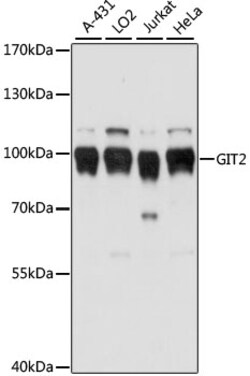
ABclonal Technology GIT2 Rabbit pAb
This gene encodes a member of the GIT protein family, which interact with G protein-coupled receptor kinases and possess ADP-ribosylation factor (ARF) GTPase-activating protein (GAP) activity. GIT proteins traffic between cytoplasmic complexes, focal adhesions, and the cell periphery, and interact with Pak interacting exchange factor beta (PIX) to form large oligomeric complexes that transiently recruit other proteins. GIT proteins regulate cytoskeletal dynamics and participate in receptor internalization and membrane trafficking. This gene has been shown to repress lamellipodial extension and focal adhesion turnover, and is thought to regulate cell motility. This gene undergoes extensive alternative splicing to generate multiple isoforms, but the full-length nature of some of these variants has not been determined. The various isoforms have functional differences, with respect to ARF GAP activity and to G protein-coupled receptor kinase 2 binding.
ABclonal Technology PE anti-Human CD87/PLAUR
This gene encodes the receptor for urokinase plasminogen activator and given its role in localizing and promoting plasmin formation likely influences many normal and pathological processes related to cell-surface plasminogen activation and localized degradation of the extracellular matrix It binds both the proprotein and mature forms of urokinase plasminogen activator and permits the activation of the receptor-bound pro-enzyme by plasmin The protein lacks transmembrane or cytoplasmic domains and may be anchored to the plasma membrane by a glycosyl-phosphatidylinositol (GPI) moiety following cleavage of the nascent polypeptide near its carboxy-terminus However a soluble protein is also produced in some cell types Alternative splicing results in multiple transcript variants encoding different isoforms The proprotein experiences several post-translational cleavage reactions that have not yet been fully defined
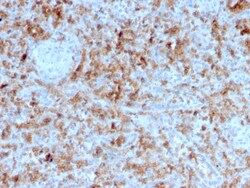
Biotium Granzyme B (NK/T-Cell Lymphoma Marker)(GZMB/3055), CF488A conjugate, 0.1mg/mL
Granzyme B is a member of the granule serine protease family stored specifically in NK cells or cytotoxic T cells. Cytolytic T lymphocytes (CTL) and natural killer (NK) cells share the ability to recognize, bind, and lyse specific target cells. They are thought to protect their host by lysing cells bearing on their surface 'nonself' antigens, usually peptides or proteins resulting from infection by intracellular pathogens. Granzyme B is crucial for the rapid induction of target cell apoptosis by CTLs in the cell-mediated immune response. Granzyme B is useful as a marker in the identification of NK/T-cell lymphomas. High percentages of cytotoxic T-cells have been shown to be an unfavorable prognostic indicator in Hodgkin's Disease. Primary antibodies are available purified, or with a selection of fluorescent CF Dyes and other labels. CF Dyes offer exceptional brightness and photostability. Note: Conjugates of blue fluorescent dyes like CF405S and CF405M are not recommende
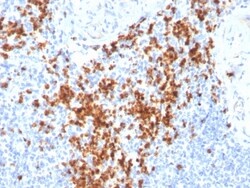
Biotium Granzyme B (NK/T-Cell Lymphoma Marker)(GZMB/3014), CF568 conjugate, 0.1mg/mL
Granzyme B is a member of the granule serine protease family stored specifically in NK cells or cytotoxic T cells. Cytolytic T lymphocytes (CTL) and natural killer (NK) cells share the ability to recognize, bind, and lyse specific target cells. They are thought to protect their host by lysing cells bearing on their surface 'nonself' antigens, usually peptides or proteins resulting from infection by intracellular pathogens. Granzyme B is crucial for the rapid induction of target cell apoptosis by CTLs in the cell-mediated immune response. Granzyme B is useful as a marker in the identification of NK/T-cell lymphomas. High percentages of cytotoxic T-cells have been shown to be an unfavorable prognostic indicator in Hodgkin's Disease. Primary antibodies are available purified, or with a selection of fluorescent CF Dyes and other labels. CF Dyes offer exceptional brightness and photostability. Note: Conjugates of blue fluorescent dyes like CF405S and CF405M are not recommende